Probate and estates
Estate jewellery for executors: before and after the grant
You are answerable for the estate's jewellery until it is passed on. Photographs and a written description commit the estate to nothing, so they can start now; any parcel can wait for the grant.
No obligation. Decline and it all comes back free; ask for part of it back and a fresh offer is made for the rest.
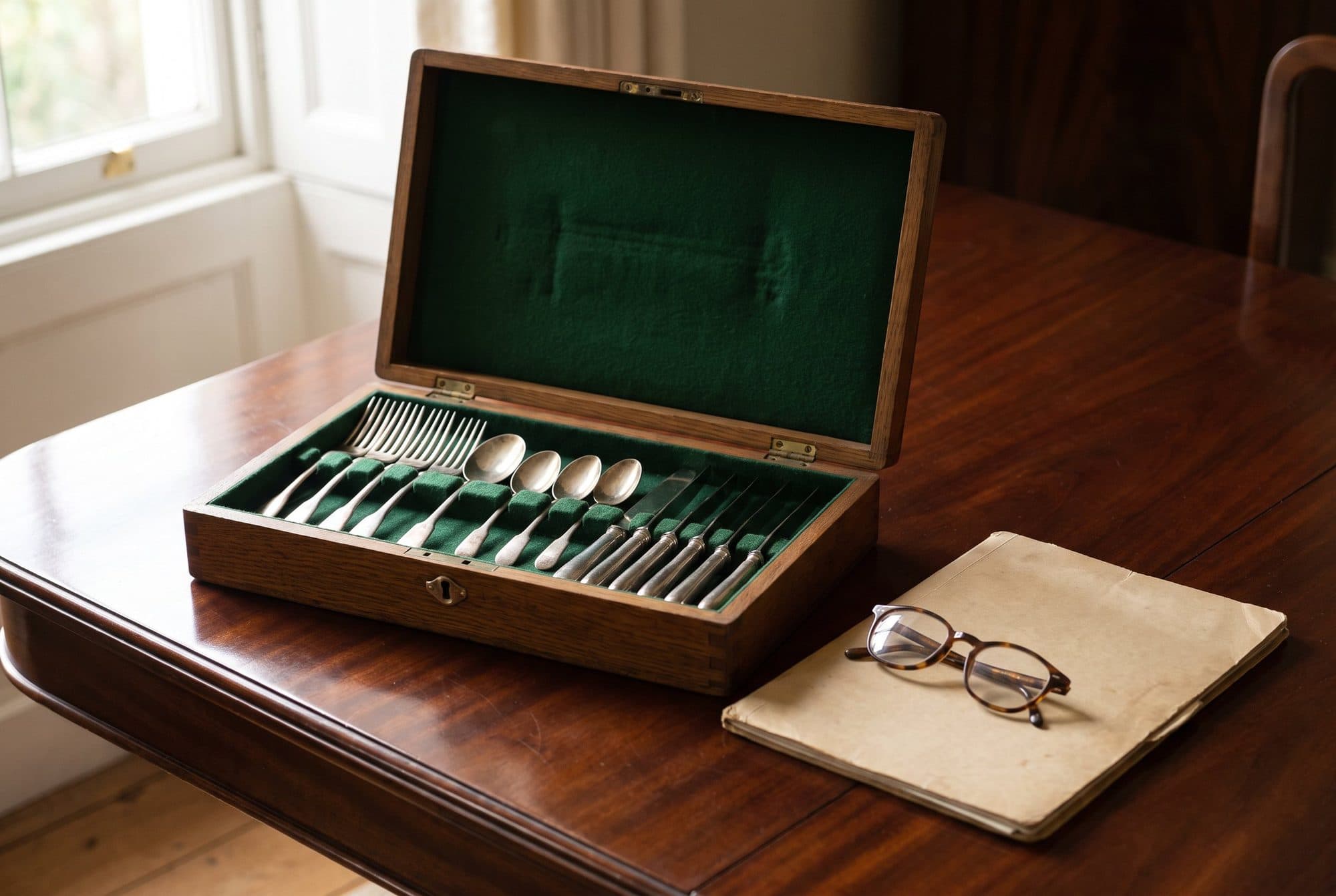
Illustration Computer-generated, not a customer’s lot.
In short
An executor can have estate jewellery identified and described from photographs before the grant, without moving or selling anything. If the estate later sends it, every piece is numbered, weighed and tested on its own, and one written offer is made for the lot. The estate file then holds an itemised record rather than a single figure. A buyer's written offer is not a probate valuation, and we do not give legal or tax advice.
- Before the grantPhotographs and a description; nothing moves
- What comes backAn itemised list with one written offer
- Who decidesThe executor, in writing
- What we are notNot valuers, not solicitors
What you can do before the grant
GOV.UK's guidance to people applying for probate is plain about disposing of property before the grant:
You should not make any financial plans or put property on the market until you've got probate.
Whether a grant is needed at all, and what may be done before it, are questions for the solicitor or probate practitioner acting on the estate. What the guidance does not stop is finding out what is there. Photographs cost nothing and move nothing, and a written description of the box is material you, or a valuer, can work from.
The order that usually works: photograph the lot and get a written description of what the marks show. Value the estate's possessions with that in hand, apply, and decide about selling once the grant has been issued. Selling jewellery as an executor before probate is granted sets that order out in more detail.
A valuation and an offer are not the same thing
Jewellery, silver and watches are household and personal goods, the category form IHT407 covers. HMRC values them on the open market basis in section 160 of the Inheritance Tax Act 1984:
the price which the property might reasonably be expected to fetch if sold in the open market at that time
The same manual says that “sales after the death, particularly those at auction, provide the best evidence of the open market value at the date of sale.” For jewellery, GOV.UK's instruction to executors is to “work out how much you would have got if you'd sold them” .
A written offer from one buyer for one mixed lot is a real document and evidence of something. It is not a professional valuation prepared on that basis, and we will not let it be described as one. Valuation, appraisal or offer sets the four kinds of document side by side.
What our written offer is
- A dated record of every item received, described piece by piece.
- What one buyer will pay for that lot, on that day, in writing.
- Evidence of what was realised, if the estate accepts it.
- A note of anything we think is worth more whole than as metal.
- Free to obtain and free to decline.
What it is not
- An open market valuation for inheritance tax.
- A probate valuation, or a valuation by a qualified valuer.
- An insurance or replacement valuation, which is a different basis again.
- A view on what an auction would make for a particular piece.
- Advice about the estate, the will, the tax position or the beneficiaries.
Where a formal valuation is the right answer
If full details of the estate are being reported, if the jewellery or silver may be significant, or if anyone is likely to question the figures, instruct a qualified valuer. Treat any buyer's offer as a separate document. A valuation costs money, and sometimes it is exactly what the estate should spend it on.
What goes in the estate file
Questions about a jewellery box tend to arrive late: from a beneficiary who was abroad, or a relative who remembers a brooch differently. GOV.UK is clear about how long the executor answers for it:
You're responsible for the assets from the date of death until the date everything has been passed on to the beneficiaries.
A written trail answers a question that may be asked two years later. This is what comes out of a parcel here, and it is yours to keep either way:
- A list of what arrivedEvery item numbered and described as it comes out of the parcel: what it is, the marks it carries, its condition, its recorded weight and the tests used on it (clause 5.1). It includes anything we will not buy.
- A written offer, datedOne amount for the lot, sent to you in writing with that list. An estate account can quote it and a beneficiary can read it.
- Your decision, in writingYou accept by the button on the offer or in writing, and it is recorded as such (clause 6.1). A declined offer is recorded as declined. Neither happens because time passed.
- What went back, and howAnything declined is repacked and returned tracked and signed for, at our cost. The file then holds a posting record for the items that came home and a payment record for the ones that did not.
- The reasoning on anything unusualWhere a piece was set aside as worth more whole than as metal, the file says so and says why. That is the line an executor most often needs to point at.
The value at the date of death also matters later if the estate or a beneficiary sells coins or a quantity of gold. Selling inherited gold and coins: the tax position explains why, in plain terms.
When more than one person has an interest
An estate with a jewellery box in it often has a disagreement somewhere, and it is rarely about money. It is about one ring. Three parts of how this works help with that, and one limit needs stating plainly.
- The list comes with the offerA family arguing from memory is arguing about different objects. A described list of what is actually there, circulated before anyone decides, settles a surprising amount of it.
- Any piece can be asked backIf a beneficiary decides they want the brooch after all, ask for it back. A fresh written offer is made for what remains, the first stays open while you decide, and the brooch comes home at our cost either way (clause 6.3).
- Nothing moves while you decideItems stay locked away while an offer is open, and nothing is melted, cut or taken apart before you accept (clause 4.4). If you need longer, ask; you do not have to give a reason (clause 10.2).
- We cannot arbitrateWe take instructions from the person who sent the lot, or someone they have authorised in writing, and from nobody else. If there is a real dispute, stop, decline, get everything back and take advice.
Dividing jewellery between beneficiaries covers what the will already decides, how to record who wants what, and what to do when two people want the same piece.
Identity, and the right to sell
Being asked to prove who you are in order to sell someone else's jewellery can feel like an accusation. It is not. A buyer who asks nothing will, in time, pay a thief for somebody's inheritance. The checks exist so that it is never yours.
Identity is checked before payment. Because an estate's seller is never the original owner, we may also ask for evidence that you are entitled to sell, such as the probate papers (clause 9.1). Payment is by bank transfer to a UK account in your own name, and no cash is paid in any amount.
Responsible sourcing and anti-money-laundering sets out the documents accepted and when more is asked, and the guide to identity and provenance checks explains the process from your side.
What the estate gets from us, in order
Seven undertakings, and what each is worth to somebody who has to account for the result.
- Ask before you postPhotographs and a written description before any item leaves the house. This is the stage that is useful before a grant: it gives you material to value from, and it starts nothing.
- Everything is itemisedEach item numbered and described as it is unpacked, before any figure is attached. That list is what an estate account and a doubtful beneficiary both want to see.
- One written offer for the lotDated, in writing, with the item list on it, sent to you to read and decide on. No part of the decision happens on a telephone call with no record of it.
- Nothing is sold until you say yesAcceptance is an act, not an expiry. No offer lapses into a sale, so an executor is never left explaining how something was sold without a decision (clause 6.2).
- Free tracked returnDecline the lot, or ask for any piece back, and it comes back tracked and signed for, at our cost. The risk in the post is ours until it is delivered to you (clause 7.2), so a family that changes its mind costs the estate nothing.
- Worth more whole? We say soCoins, antique silver, signed pieces and working watches are named before anything is priced as metal. For an estate lot we will post the whole lot back at our cost while you take another opinion, with no obligation to return it (clause 10.3).
- A person handles itOne person opens the parcel, writes the list and the offer, and answers your questions. An estate is not a ticket in a queue, and the answers should not read like one.
Where to get the advice we cannot give
We buy gold, silver, platinum and palladium by post. We are not solicitors, probate practitioners, accountants or qualified valuers, and nothing on this page is legal or tax advice. Where a point matters to the estate, it belongs to someone qualified to answer it and insured for the answer.
GOV.UK's guides are the right first stop and they are free: applying for probate, valuing the estate and dealing with the estate. For jewellery or silver that may be significant, a qualified valuer instructed on an open market basis is the document the estate needs.
Before an estate's property goes to any buyer, how to check a postal gold buyer sets out the registers to search and the questions to put to the terms. Put them to us too. How it works follows a parcel from label to payment, and offers, returns and payment is the page to send a beneficiary who asks what happens next. If you are sorting the box yourself, a box of jewellery you cannot identify and what to have looked at before you sell are the two guides to start with.
Questions executors ask
Can I sell the estate's jewellery before probate is granted?
Ask the solicitor or probate practitioner acting on the estate, because the answer depends on the will, who is applying and what the estate holds. GOV.UK's general guidance is not to put property on the market until you have the grant. Photographs and a written description are safe at any stage, and the parcel can wait. Selling jewellery before probate is granted has the detail.
Is your offer good enough for the inheritance tax figures, or do I need a professional valuation?
Our offer is not meant for that. HMRC works on open market value, and one buyer's offer for a mixed lot is not a valuation on that basis. If full details of the estate are being reported, if the items may be significant, or if anyone may question the figures, instruct a qualified valuer.
What if a beneficiary objects after the parcel has been sent?
Decline, and the lot comes back to you tracked and signed for, at our cost (clause 6.3). If they only want one piece, ask for that piece back instead: a fresh offer is made for the rest and the first stays open. Nothing is processed while you are deciding.
There is no will. Does that change how you handle it?
Not how the items are handled, but it may change who is entitled to deal with them. GOV.UK's position is that where there is a will the executors named in it apply, and where there is not, the closest living relative can. Whoever administers the estate is who we deal with, and the identity checks are the same either way.
Who do you pay, and into what account?
The verified seller, by bank transfer to a UK account in their own name, once the offer is accepted. The items become ours only when the money reaches that account, not when it is sent (clause 7.1). If the money has to go to an account held for the estate, raise it before anything is posted.
Does everything have to go in one parcel?
No, but a lot is priced as a lot. Items sent in separate parcels on different days are separate lots with separate offers, unless you ask us in writing to hold the first until the second arrives (clause 3.3). Tell us roughly what is coming before the label is issued (clause 7.4). If the estate has more than one property, bag each one separately so the list says which house every line came from.
There are medals, and something that might be ivory. What do we do with those?
Photograph both, do not clean the medals, and do not post anything that might be ivory. A named medal group is worth most as a group, and the medals guide explains where it belongs. Dealing in ivory is banned in the UK apart from narrow exemptions, which the ivory guide sets out. We do not buy it, and a piece that arrives anyway is left out of the offer and sent back (clause 11.1).
Sources
Related
Not sure what you have? Start with photographs.
Photograph the lot: the tangled chains, the single earrings, the canteen nobody uses, the bits you cannot identify. Send it over and you get a rough idea back, with no pressure of any kind. Post it afterwards if you want to, or do not.
Nothing is sold until you say yes. Decline and it all comes back by tracked post, free; ask for part of it back and a fresh offer is made for the rest.
If a piece is worth more than its metal
A signed brooch, a date-run sovereign, a watch that still runs, a piece of early silver: anything that looks worth more whole is flagged to you before it is treated as metal, and you can take it back at that point.